
Where It All Started
I was eight years old. I did not know what medicine was. But I knew I wanted to understand why people suffered.
That question stayed with me. Through school, through university, through every patient I have sat with since. It has never gone away.
My family had other plans. We had a business tradition. Law, finance, commerce. That is what they wanted for me, and for a time, that is what I studied. But the question did not leave.
The Moment That Changed Everything
Fourth year at university. My father went in for what should have been a routine procedure. A cholecystectomy. Simple, they said.
Then came the diagnosis. Intestinal cancer.
We spent months at Hammersmith Hospital. I watched exceptional doctors do everything their training had prepared them to do. They worked with skill and dedication. And still, something was missing. Not in their competence. In the framework itself.
I kept asking the same question. Why? Not about the cancer. Why this man, at this time, in this body? What factors, what history, what accumulated weight of a life had brought him to this point?
Nobody had an answer. Not because they did not care. Because the model they were working within was not designed to ask that question.
My father did not survive. But that experience gave me the only direction I have ever needed.
Going After the Answers
I needed to understand what medicine was not looking at.
I studied naturopathy, homeopathy, traditional Chinese medicine, biofield science. Not as alternatives to Western medicine. As the parts of the picture that Western medicine had not yet learned to measure.
I was looking for where the different systems of medicine connect, where they cross-reference each other, where they point to the same underlying reality from different directions.
I pursued a PhD at the SR21 Institute in Zurich, focusing on the human biofield. The photonic informational field that exists beyond what a conventional lab can observe. The research at RUDN University in Moscow extended that work further.
Over more than ten thousand clinical assessments, I have asked the same question every time. What is happening here that the scan is not showing?
The personality structure. The emotional history. The beliefs the patient carries. The energy field that holds all of it together.
These are not peripheral factors. In chronic and complex presentations, they are often where the answer is.
The Faculty
I could not build this alone. I did not want to.
I reached out to practitioners and researchers who shared the conviction that medicine needed to be more than it was.
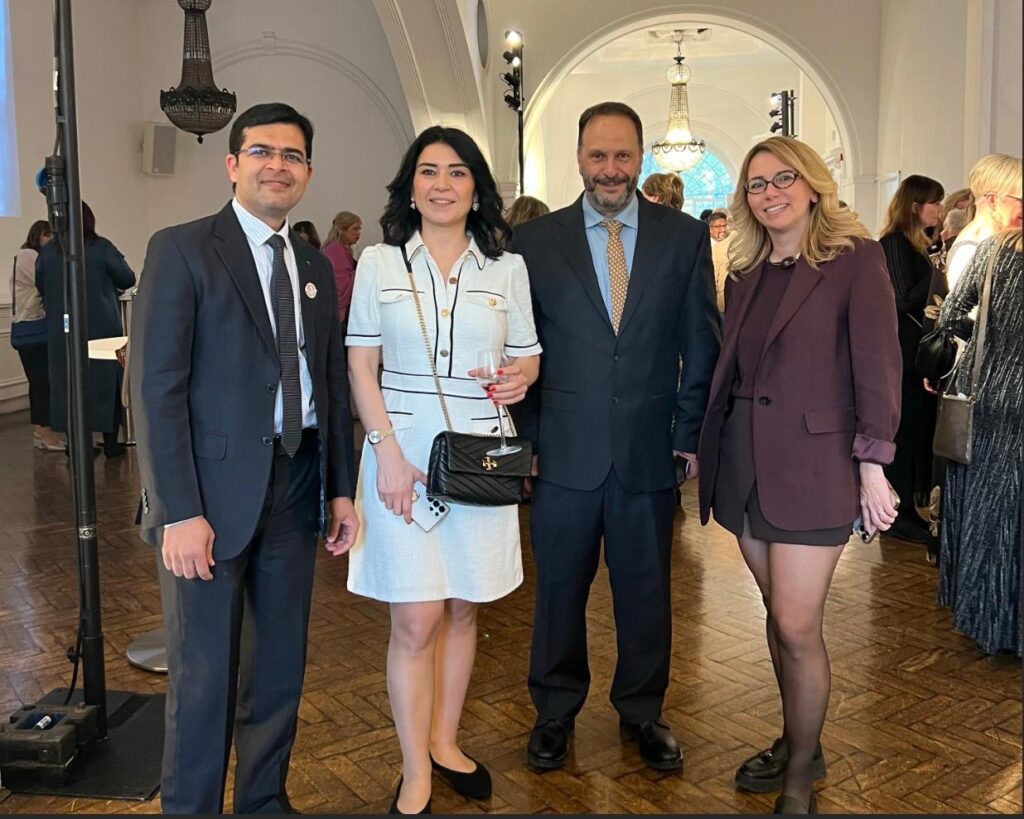
Professor Konstantin Korotkov brought decades of peer-reviewed research in biofield technology. Felix Economakis, Chartered Psychologist, brought depth to therapeutic communication, NLP, and the clinical application of psychology. Dr Bianca Madison-Vuleta, trained at Harvard Medical School and a Fellow of the Royal Society of Medicine, brought the evidence base of lifestyle medicine. Dr Shashi Mohan Sharma, Director of the Hahnemann College of Homeopathy, brought the depth of classical homeopathic training. Dr Sotirios Nikolopoulos, molecular oncologist and former researcher at Memorial Sloan-Kettering, connected the science of epigenetics to personalised clinical practice.
These are not consultants. They are educators in active clinical and academic practice who teach what they apply every day.
What We Believe
The placebo effect is not a nuisance to be controlled for. It is a healing mechanism that medicine has not yet learned to use deliberately.
Deep beliefs alter physiology. Emotional state shapes immune function. The energy field responds to what the instruments cannot yet fully capture.
If that is true, and the evidence increasingly supports that it is, then medicine has an obligation to account for it.
The Academy of Humanopathy was built on that obligation. Not to replace Western medicine. To complete it.
The Academy
The Academy of Humanopathy was established in London in 2023.
The name comes from human and the Greek pathos, meaning passion. Not passion for the diagnosis. Passion for the person.
We currently train practitioners across fifteen countries: medical doctors, certified health professionals, and career changers entering the field through the Dual Diploma Programme.
Our programme covers eight therapeutic disciplines within a structured postgraduate framework, taught by practising clinicians and researchers and assessed to postgraduate standards.
Graduates carry the professional title of Integrative Naturopath, a credential that reflects everything the Academy stands for: naturopathic principles extended through integrative medicine, biofield science, and the Humanopathic methodology.
The Work
Every practitioner who comes to us has felt the same thing. They do everything right. And something is still missing.
That feeling is not doubt. It is clinical instinct. It is the part of a practitioner that knows the picture is incomplete.
That is what we are here for. To complete it.
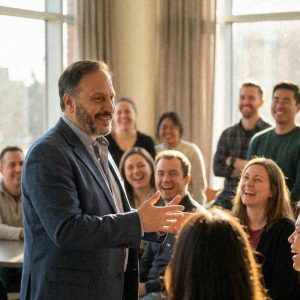
Dr Nikos Chatzibalassis, ND, PhD
Founder and Director, Academy of Humanopathy
London, United Kingdom · humanopathy.com